Volume & Vitality: The Best Hairstyles for Thin or Fine Hair
Finding the perfect hairstyle when you have thin or fine hair is all about creating the illusion of density (volume) and harnessing movement (vitality). The goal is to make the hair look fuller, bouncier, and healthier without sacrificing style.
Here are the best hairstyles categorized by length, designed to maximize volume and vitality.
1. Short Lengths (Pixies & Bobs)
Short hair is often the best friend of fine hair. Removing length removes weight, allowing the roots to lift.
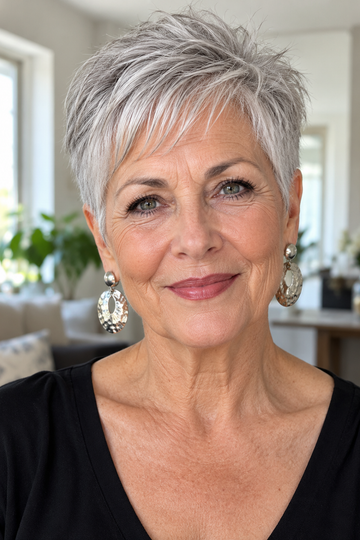
- The Textured Pixie: This is the ultimate volume booster. By keeping the back and sides short and leaving length on top with choppy, piece-y texture, the hair stands up away from the scalp. Why it works: It minimizes the contrast between thin strands and the scalp while maximizing lift.
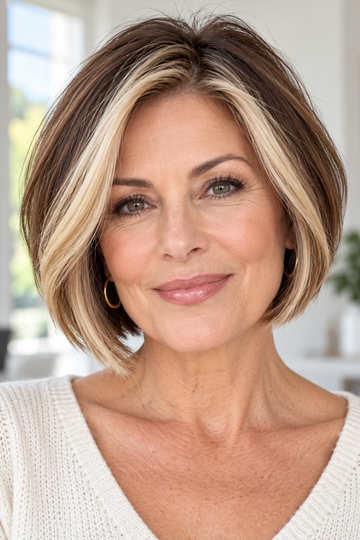
- The French Bob (with Texture): A classic bob that ends at the jawline or earlobe. To make this work for fine hair, avoid a blunt, one-length cut. Instead, ask for a soft, concave shape (shorter in the back) with subtle internal layers. Adding curtain bangs creates a halo of volume around the face.
- The Asymmetrical Bob: An angled cut (shorter in the back, longer in the front) creates geometric interest that distracts from the lack of density. The forward-graduation of the cut naturally pushes volume toward the crown.
2. Medium Lengths (Lobs & Shoulder-Length)
This is the most versatile length for fine hair, provided the weight is strategically removed.
- The "Lob" with Face-Framing Layers: A long bob (lob) falling between the chin and collarbone is ideal. The key is long layers that start at the chin. This removes bulk without sacrificing the illusion of thickness. Face-framing pieces add vitality by creating natural movement around the face.
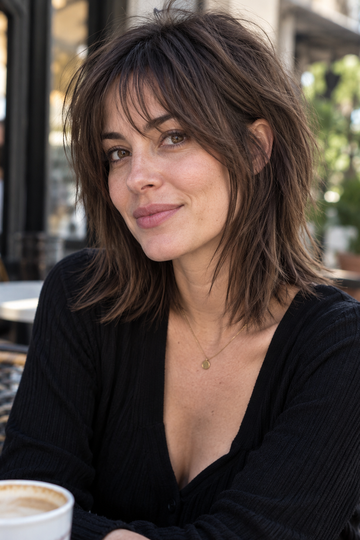
- The Shag (Modern Version): The shag is the reigning champion for fine hair. Look for a cut with short layers throughout, a soft fringe (bangs), and lots of texture. The layers create "stacking," where hair visually piles on top of itself, creating massive volume. It also makes styling effortless—it looks better a little messy.
- The Blunt Cut with Micro-Layers: Contrary to popular belief, fine hair can handle a blunt hemline (straight across the bottom) because it makes the ends look thick. However, to avoid a "triangle" shape, add micro-layers (subtle, hidden layers) just at the crown to encourage lift.
3. Long Lengths
Long hair is the most challenging for fine hair because gravity pulls the roots flat. Success relies on strategic cutting and styling.
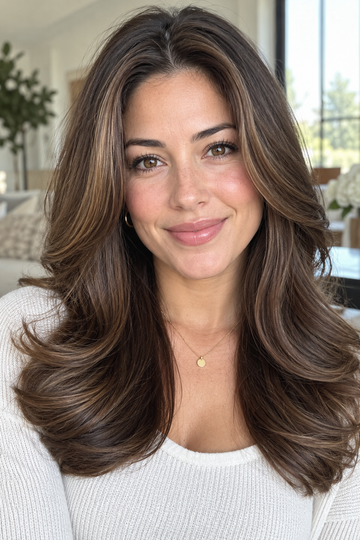
- Layered with "Invisible" Layers: If you refuse to cut your length, you must cut weight. Ask for long, dis connected layers. This means the layers are not uniform; they are strategically placed to create movement without thinning out the perimeter.
- The "Butterfly" Cut: Popularized by stylists like Sunnie Brook, this cut uses face-framing layers and a "hidden" top layer that is significantly shorter than the bottom. When styled, the shorter layer lifts and curls away from the face, creating a "butterfly wing" effect that adds immense volume to the top half of the hair.
- The Curtain Fringe: Adding heavy curtain bangs to long hair transfers visual weight from the crown to the front, making the top look fuller. It breaks up the long expanse of flat hair.
4. Vitality: The Styling Techniques
A great cut is only half the battle. To achieve vitality (lived-in movement), you must style with technique.
- The Roller Set (or Heatless Curls): Fine hair holds volume best when it sets in a rounded shape. Using Velcro rollers on the crown while the hair cools after blow-drying creates a "volume pocket" that lasts for days.
- Texture Spray over Hairspray: Fine hair is easily weighed down by heavy aerosols. Sea salt sprays, volumizing powders, and texture sprays create "grip" between strands, allowing them to prop each other up. Apply to dry roots for instant lift.
- Diffusing: If you have natural wave or curl, a diffuser is essential. Hover-diffusing (not touching the hair with the dryer) sets the cuticle without disrupting the curl clump, resulting in maximum volume with minimal frizz.
5. What to Ask Your Stylist
When you sit in the chair, avoid vague terms like "I want layers." Use these specific phrases:
- "I want to keep the weight line thick at the bottom, but I need internal weight removal to lift the crown."
- "Please point-cut the ends so they are textured, not blunt and heavy."
- "I need a cut that looks good with air-drying or second-day texture spray."
The "Do Not" List for Fine Hair
- Over-conditioning: Avoid heavy conditioners or mask on the roots. Keep conditioner to the mid-lengths and ends.
- One-length cuts without movement: A perfectly straight, one-length cut on fine hair will look flat and often reveals see-through ends.
- Heavy oils or butters: These coat the strand and cause the hair to collapse under its own weight.
Ultimately, the best hairstyle for thin or fine hair is one that combines strategic layering to remove weight, textured ends to create the illusion of density, and a styling routine that prioritizes grip and lift over shine and sleekness.