20 Short Shag Hairstyles for Women Over 60 With Fine Hair
Hair gets finer with every decade after 50, and the usual fix, cutting it shorter and blow-drying it round, often makes it look thinner. The short shag does the opposite. Layers stacked through the crown lift hair off the scalp so it looks fuller, and the choppy ends hide the sparse spots a blunt cut would expose.
It also air-dries into shape, which matters when arms get tired of holding a dryer. Every cut below stays above the shoulders and starts from one question: where does your hair need lift most?
Classic Short Chin-Length Shag

Layers start at the cheekbone and stack down to a chin-length outline, with the crown cut shortest for lift. This is the shag most stylists mean when you ask for one. The ends are razor-cut or point-cut so they separate rather than sit flat.
Apply a light mousse to damp hair, scrunch, and let it air-dry. Finger-piece the ends with a dab of paste.
Shaggy Pixie

A pixie with shag layering: longer, choppy pieces on top, shorter sides, and a softly layered nape. The top gives you something to push around while the sides stay neat. Hair this short needs a trim every five weeks.
Styling is a pea of texture cream rubbed through dry hair and pushed up at the crown. Gray hair holds this shape well because the texture stays visible.
Bixie Shag

Halfway between a bob and a pixie, with shag layers throughout. The length hits just below the ear, long enough to tuck but short enough to lift. Women who find a pixie too exposed and a bob too heavy usually land here.
Rough-dry with your fingers, then scrunch a sea salt spray through the mid-lengths. The grow-out is gentle, so it buys time between appointments.
Short Shag with Curtain Bangs

Center-parted bangs that sweep to each side, blending into a short, layered shag ending at the jaw. The bangs cover a high forehead and soften lines across it without hiding the eyes.
Dry the bangs with a small round brush, pulling each half outward. The rest of the cut air-dries. Ask for the bangs to start at the brow so they frame rather than cover.
Short Shag with Wispy Bangs

A thin, piecey fringe that lets the forehead show, over a chin-length shag. The bangs soften a long or narrow face and take almost no styling. Blow them dry with your fingers, flick the ends, done.
Thinning hair works better with wispy bangs than heavy ones, since a heavy fringe steals too much from the crown. Trim the bangs every three weeks.
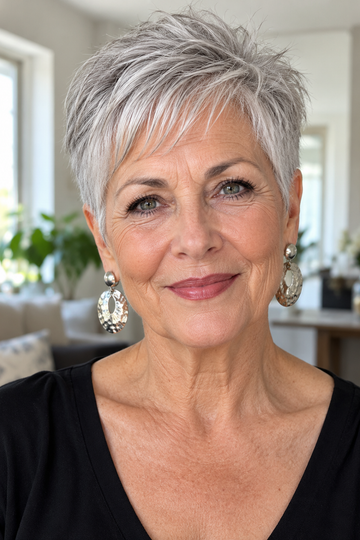
Silver Short Shag
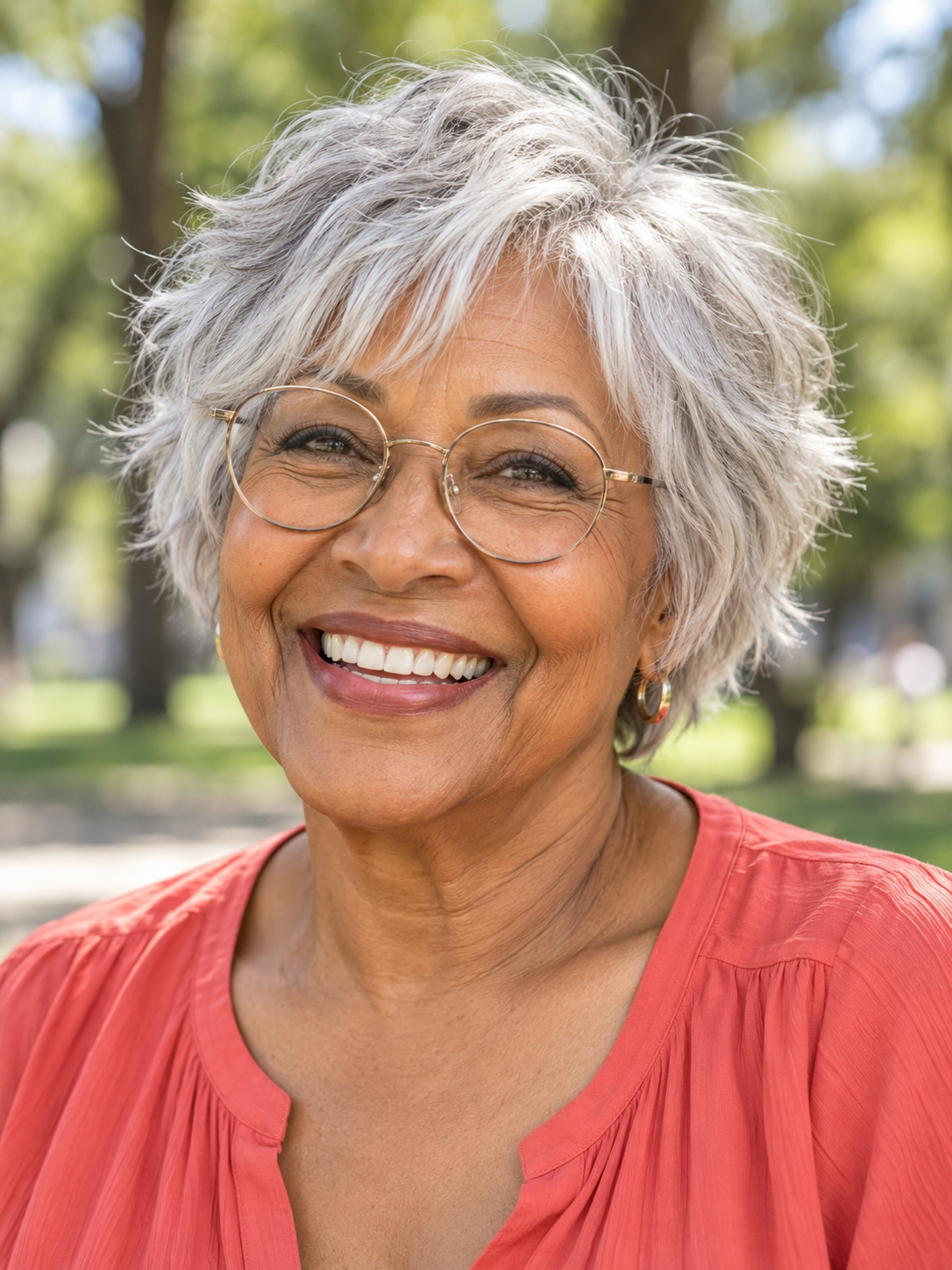
Natural silver or white hair cut into an ear-to-jaw-length shag, with layers placed so the lightest strands sit on top and catch the light. Silver hair tends to be coarser, which gives the layers grip.
A purple shampoo once a week stops yellowing. Smooth a shine serum through the ends to keep the silver glossy rather than dull. Minimal heat styling keeps the texture.
Salt-and-Pepper Shag
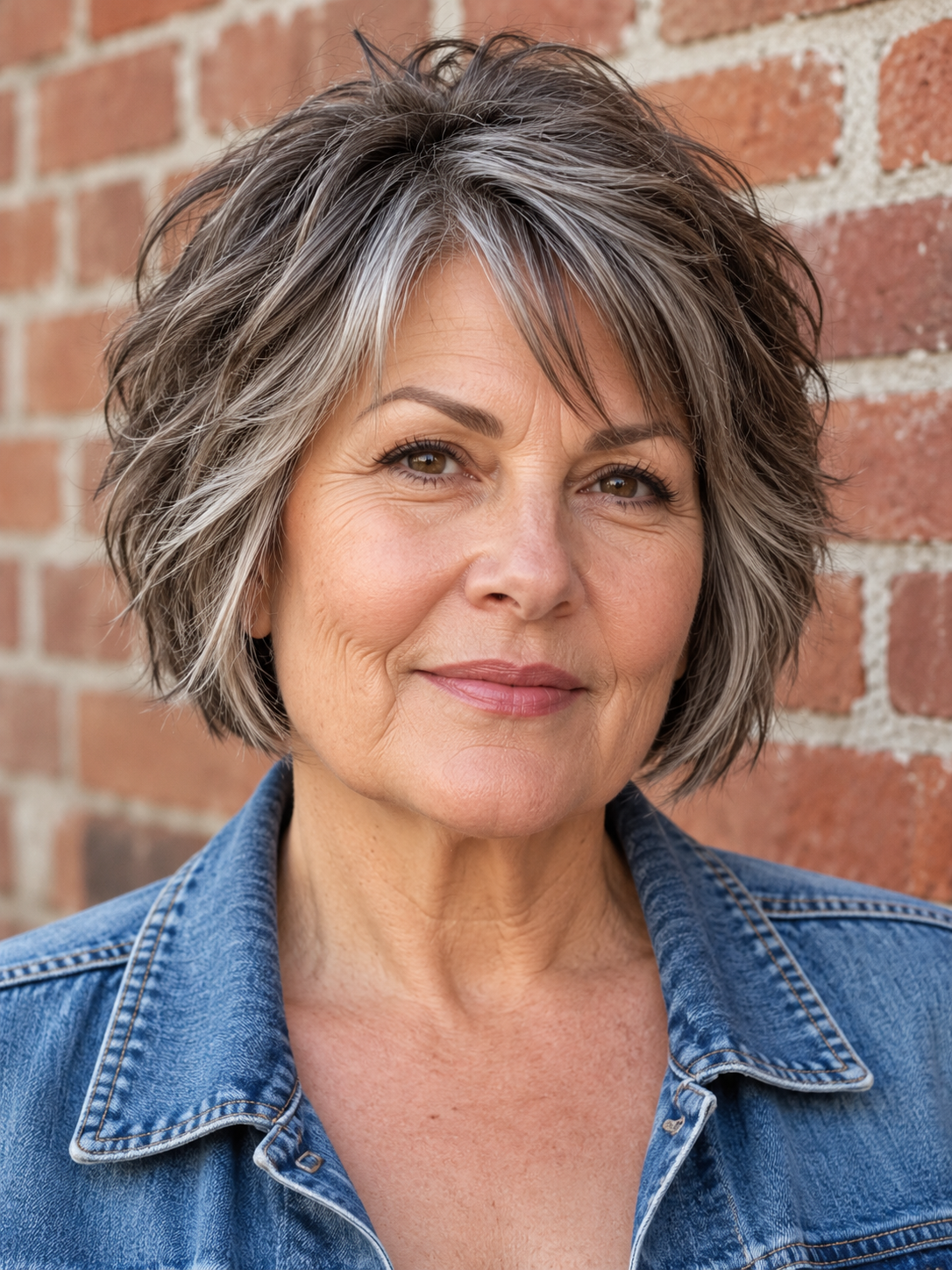
For hair partway through going gray, a short shag turns the mix of dark and silver into intentional-looking dimension. Layers scatter the gray strands through the dark ones, so there's no hard regrowth line.
Chin-length with a shorter crown. Skip color entirely or add a clear gloss to boost shine. Scrunch with mousse and air-dry; the uneven color hides any flat spots.
Short Curly Shag
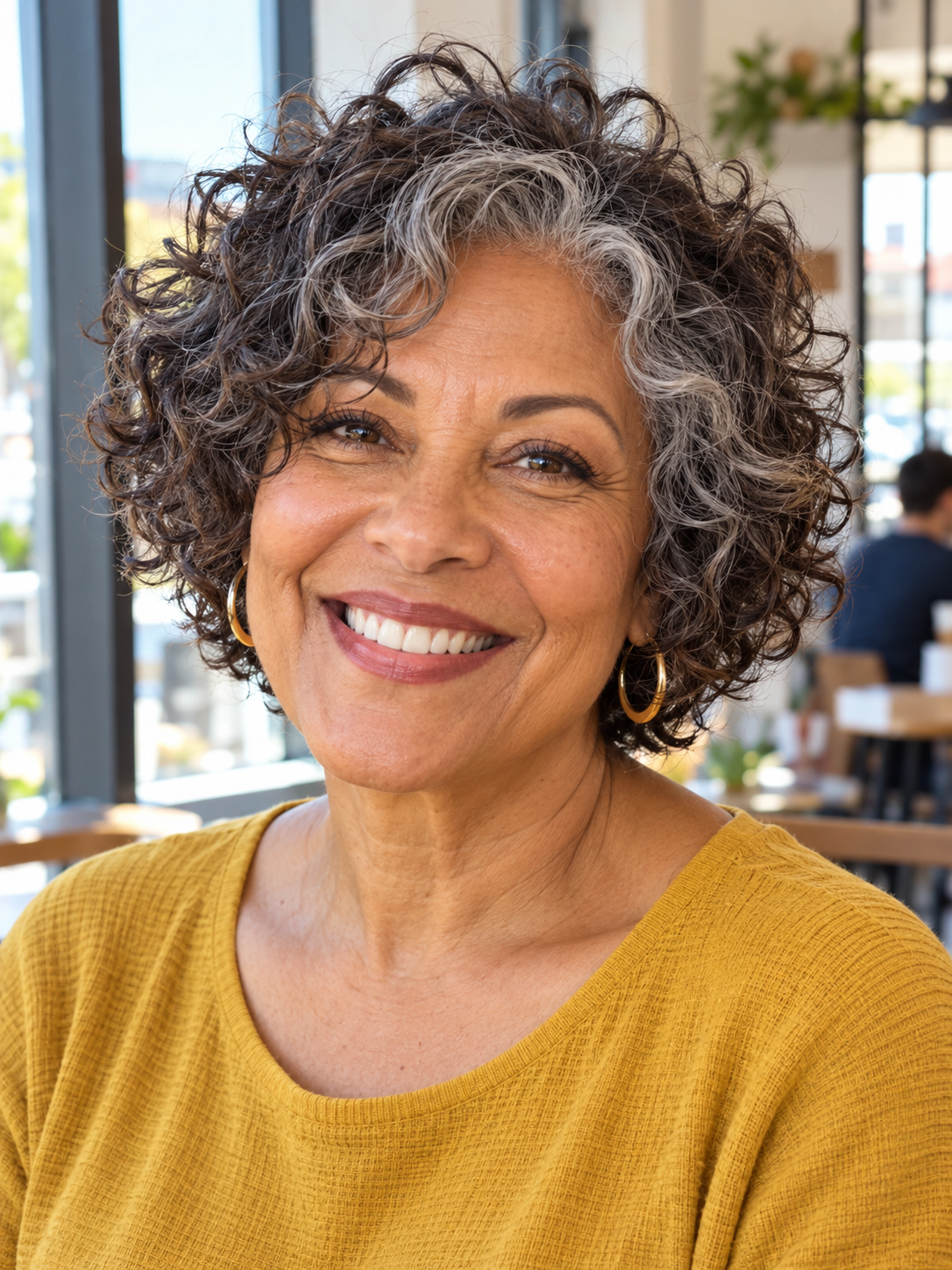
Curly hair cut dry, curl by curl, into a short shag that ends at the jaw once the curls spring up. Layers remove bulk at the sides and keep the crown lifted. Wash with a gentle cleanser, apply leave-in and a light gel to soaking-wet hair, and diffuse or air-dry.
Curls over 60 are often drier, so a weekly deep-conditioning mask keeps definition. Avoid brushing dry.
Short Wavy Shag

Natural waves cut into a short, jaw-length shag with layers that follow the bend of the wave. The waves give the layers built-in movement, so there's little styling.
Scrunch a curl cream into damp hair and air-dry, or use a diffuser on low. Fine waves do best with lighter layering so the ends don't go stringy. Refresh day two with a spritz of water and a scrunch.
Short Shag for Fine Hair
Lighter, longer layers and a chin-length perimeter that keeps as much weight as possible at the ends. The crown is still layered shorter for lift, but the ends are left fuller so the cut doesn't look sparse.
Volumizing mousse at the roots, then dry upside down. Dry shampoo on day two adds grit. Ask your stylist to avoid thinning shears entirely.
Short Shag for Thick Hair
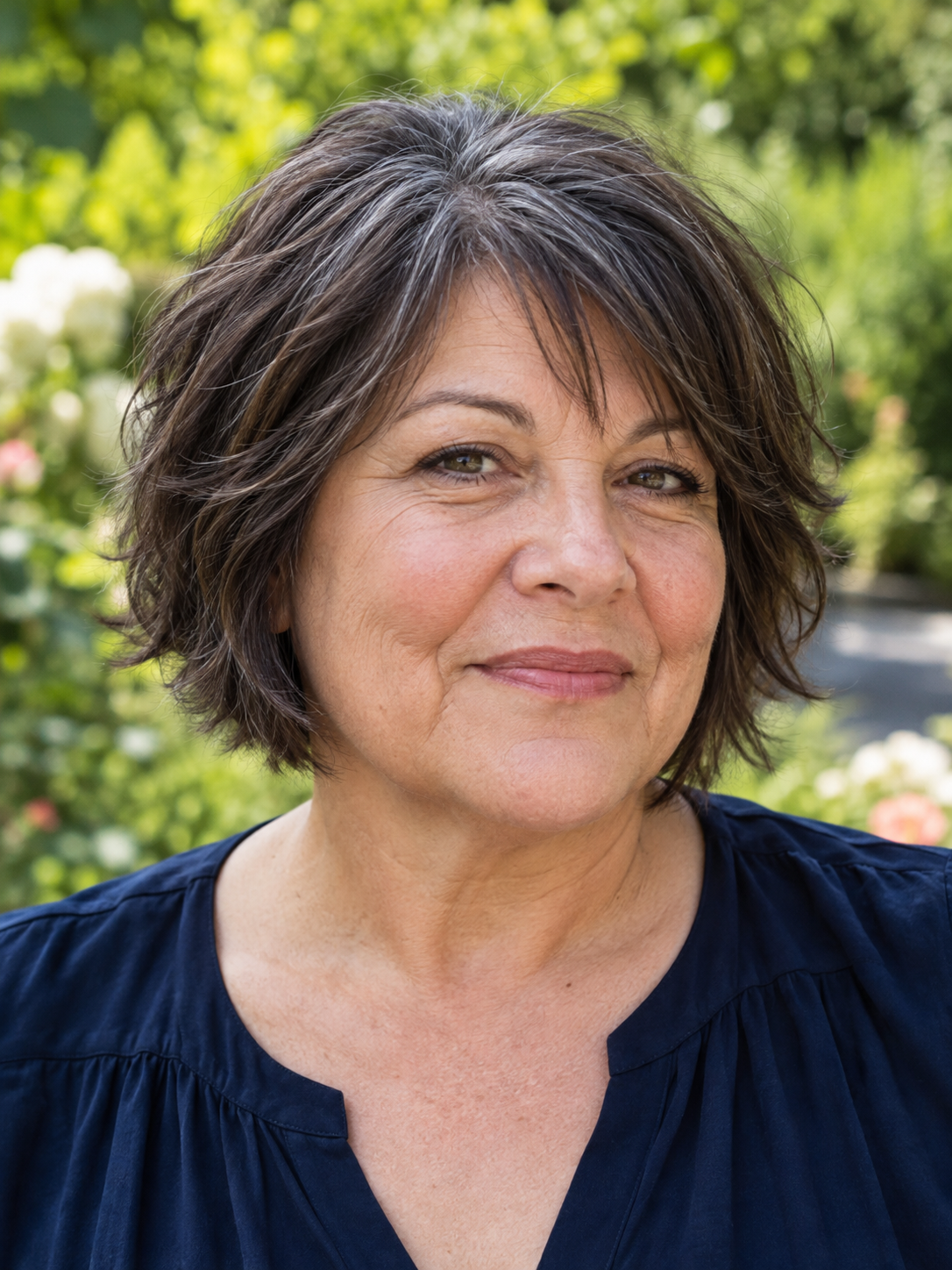
Deep, choppy layers that remove weight through the middle so the shag doesn't balloon. The crown is cut short and the ends are heavily point-cut to separate.
Thick hair over 60 can still be coarse, so a smoothing cream before drying helps the layers lie right. Air-drying works. Trim every six weeks, since thick hair grows the shape out quickly.
Short Shag with Side-Swept Bangs

A longer fringe swept to one side, blending into layers that fall to the jaw. The diagonal line across the forehead softens the face and draws attention to the eyes.
Dry the bangs over to the opposite side first, then flip them back for lift. The rest of the shag air-dries. This suits women who want a fringe but not one that needs daily straightening.
Jaw-Length Shaggy Bob

A bob outline at the jaw with shag layers through the top and sides. More structure than a classic shag, so it looks tidier at the back. Layers lift the crown without changing the bob line.
Dry with a medium round brush for a smoother finish or scrunch for texture. Both work. This holds its shape well between trims and looks neat from behind.
Ear-Length Shag

Short enough to show the ears, with layers that fall just over the tops of them. The nape is softly layered rather than clipped.
This length keeps hair fully off the neck and needs almost no styling beyond a texture paste pushed through dry hair. It suits women who want a pixie's ease with a shag's softness. Trim every five weeks.
Short Shag with Highlights

Fine, scattered highlights through a chin-length shag so the layers show separately instead of blending into one color. On blonde or light brown hair, a few lighter pieces around the face brighten the complexion.
On gray hair, a soft gloss does the same job. Highlights fade slowly on short hair since so little length is exposed. Touch up every ten to twelve weeks.
Tousled Short Shag

A chin-length shag styled deliberately messy, with the layers pushed in different directions. Scrunch a texturizing mousse into damp hair, flip your head and dry on low, then mess it up with your fingers and set with a light hairspray.
The undone finish hides any thin areas. It takes under five minutes. Works on straight, wavy, or fine hair with enough layering.
Blonde Short Shag

Light blonde or soft beige blonde on a jaw-length shag, which brightens the face as skin tone softens with age. Keep the blonde cool or neutral rather than yellow.
A root smudge in a slightly darker shade hides regrowth and adds depth at the crown. Purple shampoo every other wash. The shag's texture keeps the single color from looking flat.
Short Shag with Crown Volume

Layers cut shortest at the crown, almost to a pixie length on top, with jaw-length pieces around the face and nape. This targets the flat spot most women notice at the back of the head.
Blow-dry the crown forward and then back with a vented brush, or use a volumizing powder at the roots. The longer front stays soft and feminine.
Short Shag with Tapered Nape
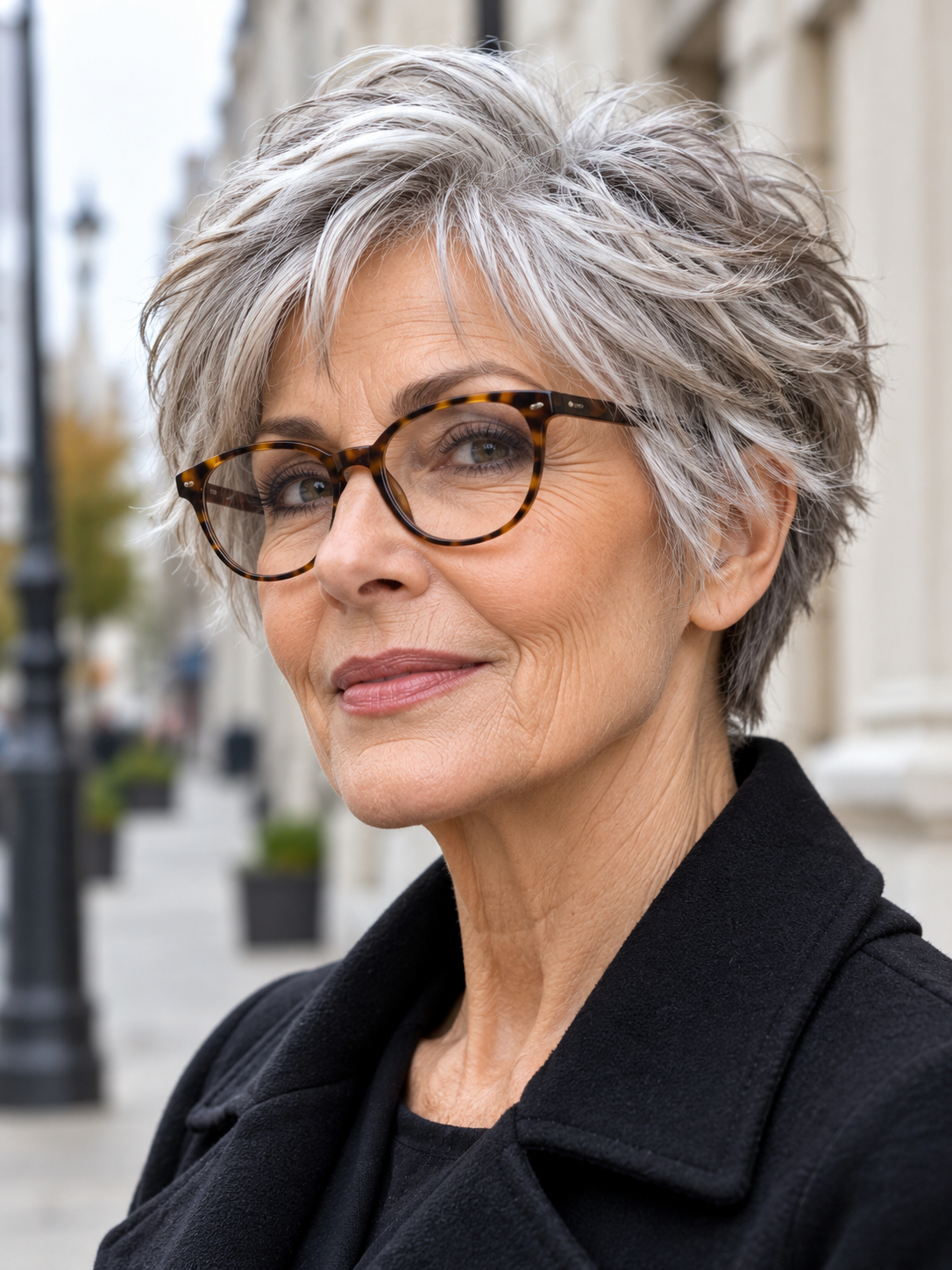
Shag layering on top and around the face, with the nape tapered close with scissors so it hugs the neck. The taper keeps the back neat while the top stays full and textured.
It suits women who want a short cut without the back looking bulky under a collar. Style with a texture paste on top. The nape needs a trim every four weeks.
Short Feathered Shag

Layers flicked outward and away from the face, in the feathered style of the late 70s, cut to the jaw. The outward direction opens up the face and adds width at the cheekbones.
Dry the layers with a round brush rolling away from the face, then set with a light hairspray. Softer than a blunt cut and more polished than a tousled shag.