The Ultimate Guide to Face Shapes: Finding Your Perfect Haircut
This is a comprehensive guide to help you identify your face shape and discover the most flattering haircuts for you. While "rules" are made to be broken, understanding the principles of geometric balance can be a powerful tool in finding a style that makes you feel confident.
Part 1: How to Find Your Face Shape
First, you need to accurately determine your face shape. Pull your hair back away from your face, grab a flexible measuring tape (or a ruler and a mirror), and note the following measurements:
- Forehead: Measure across the widest part, from hairline to hairline.
- Cheekbones: Measure across the widest point—typically from the outer edge of one cheekbone to the other.
- Jawline: Measure from the tip of your chin to the point below your ear (the angle of your jaw). Multiply that number by two to get the full jawline measurement.
- Face Length: Measure from the center of your hairline to the tip of your chin.
Now, compare your measurements to these seven primary shapes:
| Face Shape | Characteristics | Common Confusion |
|---|---|---|
| Oval | Length is greater than the width of the cheekbones. Forehead is slightly wider than the jawline. The angle of the jaw is rounded, not sharp. | The "ideal" shape. Most styles work. |
| Round | Length and width are nearly equal. Cheekbones are the widest part. The jawline is soft, curved, and not defined. | Often confused with Oval, but the key is the lack of length and a softer jaw. |
| Square | Length, width, and jawline are all roughly equal. The jawline is the defining feature—sharp, angular, and strong. | Distinct from Rectangle because the width and length are almost the same. |
| Oblong/Rectangle | Length is the most prominent measurement. Forehead, cheekbones, and jawline are all similar in width. The jaw is square or angular. | Often confused with Square, but the face is visibly longer. |
| Heart | Forehead or cheekbones are the widest. The face tapers down to a narrow, pointed chin. | Often confused with Inverted Triangle. The defining feature is a widow's peak or a distinct point at the chin. |
| Diamond | Cheekbones are the widest point. Forehead and jawline are narrow and similar in width. The chin is often pointed. | The rarest shape. Distinct from Heart because the forehead is narrow, not wide. |
| Pear/Triangle | Jawline is the widest part. The face tapers upward to a narrower forehead. | The opposite of the Heart shape. |
Part 2: The Best Haircuts for Each Face Shape
Here’s where we translate measurements into style. The goal is usually to create balance: add width where it’s narrow, soften angles where it’s sharp, and add length where it’s round.
1. Oval Face (The Versatile)
Goal: Maintain the natural balance. You have the most flexibility.
- Best Styles:
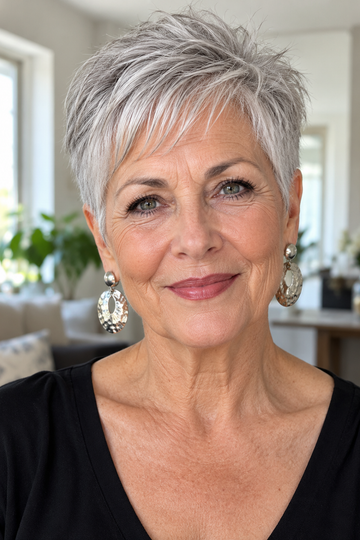
- Almost Anything: You can pull off most trends, from pixie cuts to ultra-long layers.
- Textured Lob (Long Bob): Hits right at the collarbone and adds modern movement.
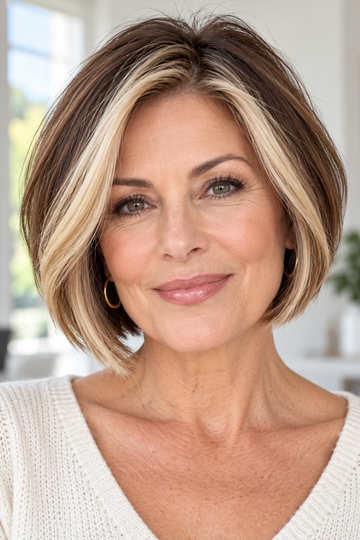
- Blunt Bob with Bangs: A sharp, chin-length bob or a sleek, blunt cut with curtain bangs looks sophisticated.
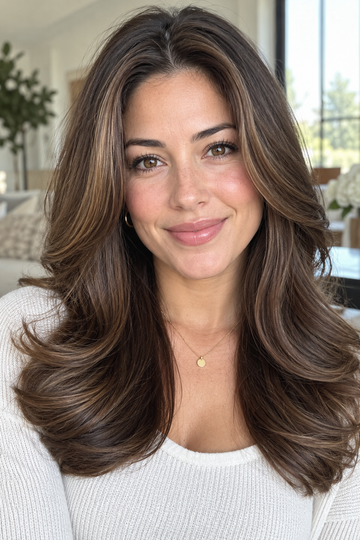
- Long Layers: Adds volume without overwhelming the face’s natural symmetry.
- What to Avoid: Heavy, one-length styles that add too much weight at the bottom can elongate the face unnecessarily. Avoid styles that cover up your balanced features.
2. Round Face (The Soft)
Goal: Create the illusion of length and definition to counteract the width.
- Best Styles:
- Long Layers: Layers that start below the chin draw the eye vertically, creating a lengthening effect.
- High Volume at the Crown: Adding height at the top of the head (via a pompadour, quiff, or voluminous blow-dry) makes the face appear longer.
- Side-Swept Bangs: A deep side part and sweeping bangs break up the roundness and create an asymmetrical, lengthening line. Avoid blunt, straight-across bangs.
- Textured, Angled Bob: A bob that is shorter in the back and longer in the front (an A-line cut) creates a sharp, angular line that slims the face.
- What to Avoid: Chin-length bobs with rounded edges, center parts, and short, curly styles that add volume to the sides of the face.
3. Square Face (The Strong)
Goal: Soften the strong jawline and angles. Add height and movement.
- Best Styles:
- Long, Wispy Layers: Soft, feathery layers that begin around the jawline help to de-emphasize its angularity.
- Side-Swept Bangs: These are excellent for creating a diagonal line across the forehead, softening the overall squareness.
- Textured Pixie: A choppy pixie with wispy pieces around the temples and ears softens the face’s hard edges.
- Layered Curls: Soft, voluminous curls or waves break up the straight lines of the jaw and forehead beautifully.
- What to Avoid: Blunt, chin-length bobs that end right at the jawline (this emphasizes the width) and heavy, straight-across bangs.
4. Oblong/Rectangle Face (The Long)
Goal: Create the illusion of width and shorten the appearance of length.
- Best Styles:
- Blunt Bangs or Curtain Bangs: Bangs are your best friend. They visually shorten the length of the face. Blunt bangs create a horizontal line, while curtain bangs add width.
- Chin-Length Bobs: A full, chin-length bob adds width to the sides, breaking up the vertical line.
- Layered Cuts: Layers add volume and width. Avoid long, straight, one-length styles that drag the face down.
- Textured Waves: Volume on the sides (not just the top) helps widen the appearance of the face.
- What to Avoid: Long, straight hair with no layers or bangs. Avoid styles with excessive height at the crown, as this will make the face look even longer.
5. Heart Face (The Dramatic)
Goal: Reduce width at the forehead and add volume and width at the jawline to balance the pointed chin.
- Best Styles:
- Side-Swept Bangs: The ultimate style for a heart shape. Long, side-swept bangs cover part of the wide forehead and draw attention to the eyes.
- Chin-Length Bobs or Lobs: A cut that ends at or below the chin adds visual weight to the lower half of the face, balancing a narrow jawline.
- Textured, Layered Cuts: Layers and texture around the chin and jaw area soften the point of the chin.
- Pixie Cuts: A side-swept pixie with volume at the temples is incredibly flattering.
- What to Avoid: Short, cropped styles that are very full at the crown (like a pompadour), center parts, and blunt, short bangs that emphasize the width of the forehead.
6. Diamond Face (The Angular)
Goal: Soften the cheekbones and add width to the forehead and jawline for balance.
- Best Styles:
- Chin-Length or Longer Bobs: A bob that ends at the chin or just below helps balance the narrow jawline. Adding waves or curls softens the prominent cheekbones.
- Side-Swept or Curtain Bangs: These bangs help narrow the appearance of the widest part of the face (the cheekbones) while adding width to a narrower forehead.
- Layered Styles with Movement: Soft, textured layers, especially around the eye and cheekbone area, are key. Avoid severe, geometric cuts.
- Soft Pixie: A pixie with length at the temples and softness around the ears helps balance the narrow forehead.
- What to Avoid: Severe slicked-back styles that highlight the cheekbones and temple width. Also avoid center parts and very short, cropped cuts that lack volume around the forehead and jaw.
7. Pear/Triangle Face (The Balanced)
Goal: Add width and volume to the forehead and temple area to balance a wider jawline.
- Best Styles:
- Volume at the Crown & Temples: Styles that have fullness at the top and sides of the head help draw the eye upward, balancing the jaw. Think voluminous blowouts or textured quiffs.
- Long Layers: Layers that start above the ear add volume to the top half of the face.
- Side-Swept Bangs: A deep side part and sweeping bangs help widen the appearance of the forehead.
- Shoulder-Length Styles: Hair that hits the shoulders or collarbone works well, especially with soft waves that don’t add extra bulk to the jawline.
- What to Avoid: Blunt, chin-length bobs that end right at the jawline, center parts, and styles that are very flat on top but full at the bottom.
Part 3: Final Pro-Tips
- Texture is King: Your hair’s natural texture (straight, wavy, curly, coily) matters just as much as your face shape. A haircut that looks great in theory may require more styling than you’re willing to do. Always consult with a stylist about how a cut will work with your natural texture.
- Lifestyle Matters: A beautiful, high-maintenance haircut is only beautiful if you have the time to style it. Be honest with your stylist about your daily routine.
- The "Golden Ratio" is a Guideline: The most flattering haircut is one that makes you feel powerful, confident, and authentic. Use these guidelines as a starting point, but don’t be afraid to break them if you love a particular style.
- Consult a Professional: Bring pictures of what you like and pictures of what you don’t like. A great stylist will use their expertise to blend your face shape, hair texture, and lifestyle into a cut that is perfectly tailored to you.