20 Shaggy Hairstyles For Women Over 60
A shag earns its reputation as one of the most forgiving cuts for changing hair, since the built-in layering does double duty, adding movement where hair has thinned and disguising the unevenness that comes with texture shifting over time. It also happens to need less daily effort than most people expect once it's cut correctly. Here are twenty ways to wear it after 60.
Classic Layered Shag

Heavy layering throughout a medium-length shag adds volume and texture without much daily styling effort. This cut suits most face shapes and hair densities. A woman in her mid-60s might find this her easiest everyday option between salon visits.
Shag with Curtain Bangs

Curtain bangs split down the middle soften the face while the shag's layers add movement throughout the rest of the cut. This combination works especially well for hair that's lost some natural volume. Regular trims keep the bangs from growing out unevenly against the shag's shape.
Short Cropped Shag

A shorter version of the shag, cropped closer to the head, offers a lower-maintenance option while keeping the layered texture the cut is known for. This suits a woman in her early 70s wanting minimal daily styling. A texturizing spray applied to damp hair enhances the shorter layers.
Wavy Shag

Natural waves paired with a shag's built-in layering create texture that looks effortless with minimal product. This works particularly well air-dried, since the wave pattern and the layers complement each other. A light mousse applied before drying helps define the waves without frizz.
Shag with Side-Swept Bangs

A longer, side-swept fringe paired with shag layers adds asymmetry that softens the overall shape. This suits a woman in her late 60s wanting a bit more movement than a symmetrical cut. A light styling paste holds the fringe's sweep without weighing hair down.
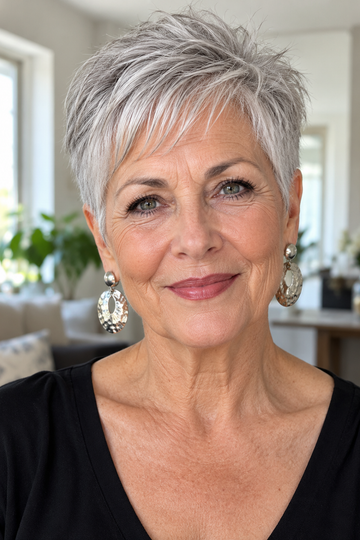
Silver Shag

Gray or silver hair paired with a shag's texture shows off the color particularly well, since the layering catches light differently throughout. This combination suits most face shapes. A glossing treatment keeps silver tones looking bright rather than dull.
Shag with Volume at the Crown

Concentrating extra layering at the crown builds height specifically where hair tends to flatten first with age. This works well paired with lighter layering elsewhere to keep the overall shape balanced. A root-lifting spray applied before drying helps sustain the lift.
Curly Shag

For naturally curly or coily hair, a shag cut lets each curl move independently rather than clumping into one heavy shape. This suits most curl patterns and textures. Diffusing while drying helps hold the shape without curls dropping flat by midday.
Shoulder-Length Shag

A shag cut ending right at the shoulders offers enough length for versatility while keeping the layered texture manageable. This medium length suits a woman in her mid-60s wanting a style that works both down and pulled back. Portrait framing captures the layering particularly well from the shoulders up.
Shag with Blunt Perimeter

Keeping the outer perimeter blunt while layering happens throughout the interior creates a fuller-looking silhouette than an entirely choppy shag. This works especially well for fine hair that can look sparse with too much thinning at the ends. Regular trims keep the blunt line crisp.
Textured Pixie Shag

A very short shag, closer to a textured pixie in length but still carrying the layered movement of a shag, offers one of the lowest-maintenance options on this list. This suits a woman in her early 70s wanting minimal daily effort. A matte paste worked through with fingers defines the texture.
Shag with Face-Framing Layers

Softly layered pieces cut specifically around the front highlight the face while the rest of the shag's layers add volume elsewhere. This works well for most face shapes and hair densities. It suits both everyday wear and slightly dressier occasions with minimal extra styling.
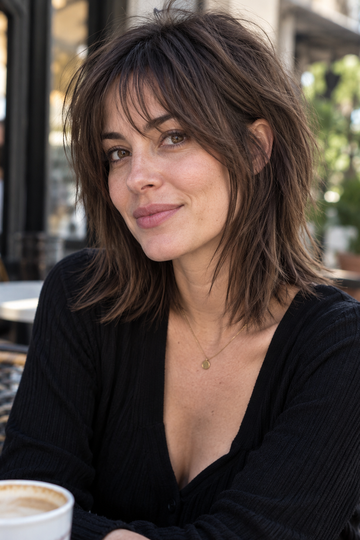
Choppy Shag

More heavily textured and irregular layering throughout creates a shaggier, more undone version of the classic cut. This suits a woman in her mid-60s wanting a slightly edgier shape. A texturizing spray enhances the choppy layers without extra blow drying.
Shag with Root Melt Color

A soft root melt blending natural gray growth into a slightly lighter overall color removes the harsh line that can otherwise show through a shag's layered texture. This technique suits hair transitioning to gray unevenly. Toning appointments every few months keep the melt looking intentional.
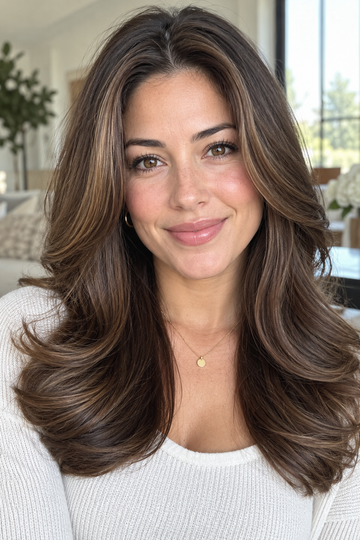
Long Shag

A longer version of the shag keeps length while still carrying heavy layering throughout for movement. This suits a woman in her late 60s wanting to hold onto length without it looking flat or heavy. A deep conditioning treatment weekly keeps the longer ends from looking brittle.
Shag with Undercut

A subtle undercut beneath a shag's layers removes bulk at the nape, letting the top layers sit lighter. This suits thicker hair that can feel weighed down even with a layered cut. The undercut stays mostly hidden, visible only when the top layer is lifted.
Wolf Shag

Blending the choppy, heavily textured qualities of a wolf cut with the classic shag's layering creates a trendier, edgier silhouette. This works on medium to long hair with some natural wave. Curtain bangs added to this cut boost the face-framing detail further.
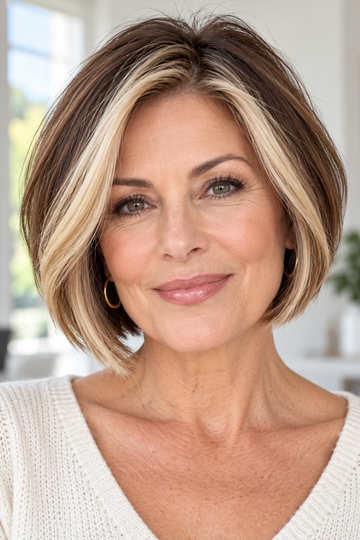
Shag with Money Piece Highlights

Two brightened face-framing pieces add subtle contrast to a shag's natural texture without an all-over color change. This works on straight, wavy, or curly versions of the cut alike. It's a lower-commitment way to brighten a look while keeping the shag's low-maintenance appeal.
Shag with Diffused Curls

Diffusing rather than air drying flat helps a curly or wavy shag hold its shape and volume through humidity and throughout the day. This suits fine to medium curl density that tends to fall without heat styling. A curl cream applied before diffusing locks the definition in place.
Shag with Half-Up Style

Pulling the crown section of a shag back while leaving the rest down adds height without a full updo. This works especially well for hair that's lost some natural volume with age. Portrait framing captures this style well since the added height shows clearly from the shoulders up.