16 Pixie Hairstyles For Women Over 50
A pixie after 50 works best when it's cut with intention rather than as a shortcut out of longer hair that's become harder to manage. The details matter more at this length, since there's no extra length to disguise unevenness or a fringe that's grown out wrong. Here are sixteen ways to get it right.
Classic Textured Pixie

A simple, textured pixie with light layering throughout offers a versatile, easy-to-style option for most face shapes. This cut requires minimal daily effort beyond a light styling cream worked through with fingers. A woman in her mid-50s might find this her lowest-maintenance option overall.
Pixie with Volume at the Crown

Concentrating layers specifically at the crown builds height exactly where hair tends to flatten first with age. This works well paired with lighter layering elsewhere to keep the shape balanced. A root-lifting spray applied before drying helps sustain the lift through the day.
Side-Swept Pixie

A longer top section swept to one side adds asymmetry that softens the pixie's overall shape. This works well for a woman in her early 60s wanting a bit more movement than a very short, structured cut. A matte styling paste holds the sweep without weighing hair down.
Pixie with Wispy Bangs

Wispy, textured bangs left slightly longer than blunt soften the forehead while keeping the overall cut short and low-maintenance. This suits most face shapes and pairs well with straight or lightly waved hair. Bangs need trimming every few weeks to stay light and out of the eyeline.
Pixie with Undercut Detail

A subtle undercut at the nape removes bulk underneath while keeping length and volume at the crown, creating a balanced silhouette. This suits hair that can feel weighed down even at short lengths. The undercut stays mostly hidden, visible only when the top layer is lifted.
Rounded Pixie

A softly rounded silhouette, rather than an angular or choppy shape, creates a classic, timeless look that suits most mature features well. This suits a woman in her late 50s wanting an easy, low-fuss cut. A light-hold spray keeps the roundness from collapsing throughout the day.
Pixie with Curled Ends

Curling just the ends of a slightly longer pixie adds movement without requiring volume throughout the whole cut. This suits a woman in her mid-60s wanting a bit more polish for special occasions. A small barrel curling iron used sparingly keeps the ends from looking overdone.
Asymmetrical Pixie

An asymmetrical cut, longer on one side than the other, adds visual interest without relying on color contrast to do the work. This suits a woman in her early 50s wanting a slightly more modern take on the classic pixie shape. It requires a bit more precise cutting to maintain as it grows out.
Pixie with Face-Framing Layers

Softly layered pieces around the front add movement near the face without disrupting the rest of the cut's simplicity. This works particularly well for hair that's kept its natural texture. It suits most face shapes and requires only a quick styling pass each morning.
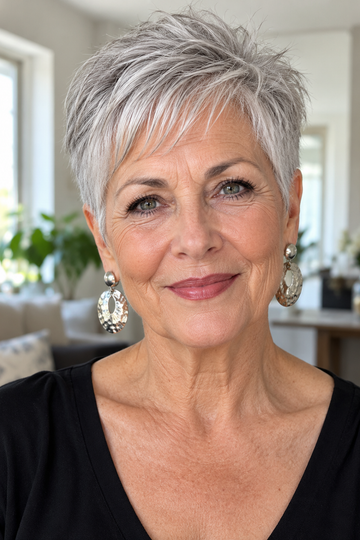
Silver Pixie

Gray or silver hair paired with a pixie cut shows off the color particularly well, since short length keeps the tone visible without length to dull it. This combination suits most face shapes. A glossing treatment keeps silver tones looking bright rather than dull or yellowed.
Textured Crop with Piecey Layers

Piecey, separated texture throughout a short crop breaks hair into visible individual sections rather than one flat mass. This suits a woman in her late 50s wanting a low-maintenance cut with a bit of edge. A matte paste worked through with fingers defines the pieces.
Pixie with Deep Side Part

A deep side part paired with a pixie creates asymmetry that suits most face shapes while keeping the overall cut simple. This works well for a woman wanting a quick daily styling routine. A light-hold gel keeps the part crisp through the day.
Pixie with Root Melt Color

A soft root melt blending natural color into a slightly lighter shade removes the harsh line that can show through a pixie as gray grows in unevenly. This technique suits hair transitioning color across the scalp. Toning appointments every few months keep the melt looking fresh rather than grown out.
Pixie with Soft Waves

Adding soft waves through the top section with a small curling wand creates gentle movement that reads as fuller than flat, straight styling. This works well for special occasions or anytime extra polish feels worthwhile. A light-hold spray keeps the waves from falling out too quickly.
Pixie with Volume at the Nape

Adding lift specifically at the nape balances a pixie's overall shape when hair tends to lie flat at the back. This works well paired with more volume at the crown for an evenly full silhouette. A root-lifting mousse applied before drying helps sustain the lift.
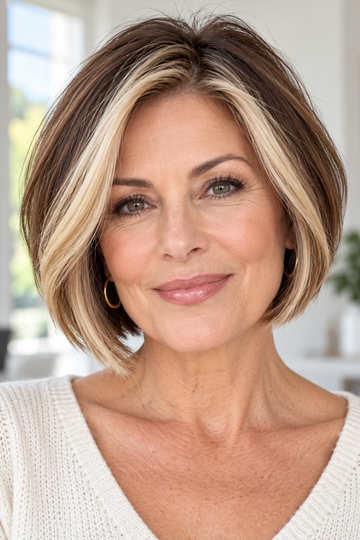
Cropped Bixie

A bixie blends the ease of a pixie with the softer shape of a bob, giving a bit more length and versatility than a classic pixie. This cut suits hair with reliable natural bounce or texture. It also requires less daily styling time than longer cuts while still offering a bit more to work with.